

Quick Answer
An airless pump bottle is a cosmetic packaging system that uses vacuum pressure to dispense product without a traditional dip tube. Its main advantages include reduced air exposure, better product protection, controlled dispensing, and a premium user experience. However, it also has limitations such as higher cost, formula compatibility requirements, more complex structure, and the need for careful testing before mass production.
Key Facts About Airless Pump Bottles
- Commonly used for serums, creams, lotions, and premium skincare products
- Uses a vacuum system instead of a traditional dip tube
- Helps reduce air exposure during product use
- Can improve dispensing consistency in many applications
- Usually costs more than standard lotion pump packaging
- Requires formula compatibility and leakage testing before bulk production
- Suitable for skincare brands, cosmetic manufacturers, and private-label packaging projects
Introduction
Airless pump bottles are widely used in modern skincare and cosmetic packaging. Compared with traditional lotion pump bottles or jars, airless packaging offers a cleaner, more controlled, and more premium dispensing experience.
For skincare brands, packaging is not only about appearance. It also affects formula protection, product usability, customer satisfaction, and brand positioning.
However, airless pump bottles are not the best choice for every product. They have clear advantages, but they also come with limitations that brands should understand before making a packaging decision.
In this guide, we will explain how airless pump bottles work, their main advantages, their limitations, and how to decide whether they are right for your cosmetic product.
What Is an Airless Pump Bottle?
An airless pump bottle is a dispensing container designed to push product upward using vacuum pressure instead of a dip tube.
In a traditional lotion pump bottle, the pump draws product through a tube. In an airless pump bottle, the product is usually pushed upward by an internal piston or vacuum mechanism as the pump is pressed.
Airless pump bottles are commonly used for:
- Facial serums
- Moisturizing creams
- Eye creams
- Sunscreen
- Anti-aging skincare products
- Premium cosmetic formulations
They are especially popular for products that need cleaner dispensing, controlled dosage, and a higher-end packaging appearance.
How Does an Airless Pump Bottle Work?
An airless pump bottle works through a vacuum-based dispensing system.
Basic Working Process
- The user presses the pump head
- Vacuum pressure is created inside the bottle
- The internal piston or base moves upward
- Product is pushed toward the pump outlet
- The product is dispensed without a traditional dip tube
Because the product is pushed upward from the bottom, many airless bottle designs can reduce product residue compared with some traditional pump systems.
The actual performance depends on the bottle structure, pump quality, formula viscosity, and compatibility between the packaging and the product.
Airless Pump Bottle Structure
A typical airless pump bottle may include:
- Actuator – the part pressed by the user
- Pump engine – controls dispensing performance
- Bottle body – holds the product
- Inner piston or movable base – pushes product upward
- Shoulder or closure – connects the pump and bottle body
- Nozzle – releases the product
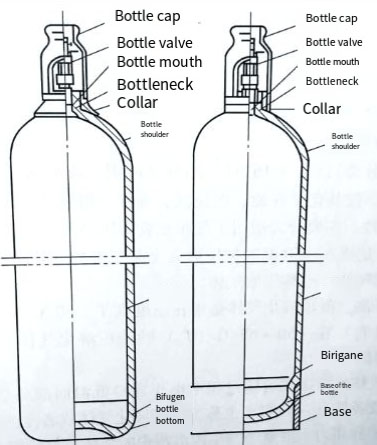
airless pump bottle structure
Main Advantages of Airless Pump Bottles
Airless pump bottles offer several important advantages for skincare and cosmetic packaging.
1. Reduced Air Exposure
One of the biggest advantages of airless pump bottles is reduced air exposure during use.
In many traditional packages, air can enter the container after each use. With airless packaging, the vacuum system helps reduce contact between the formula and external air.
This can be helpful for skincare products that contain ingredients sensitive to oxidation or contamination.
Common examples include:
- Serums
- Anti-aging products
- Brightening products
- Natural skincare formulas
- Premium facial creams
Airless packaging does not make a product permanently protected, but it can support better formula handling in many applications.
2. Better Product Protection
Airless bottles reduce the need for users to open the container or touch the product directly.
Compared with jars, this can help reduce direct contact between fingers and the formula.
For skincare products used repeatedly, this packaging format can improve product hygiene and user confidence.
3. Controlled Dispensing
Airless pump bottles can dispense a relatively consistent amount of product with each press.
This helps users apply the right amount and avoid overuse.
Controlled dispensing is especially useful for:
- High-value skincare products
- Small-dose facial serums
- Eye creams
- Treatment products
For brands, consistent dosage can also improve customer experience and product usage perception.
4. Less Product Waste in Many Designs
Because airless bottles push product upward from the bottom, they can help reduce leftover product inside the container in many cases.
This can be an important advantage for premium skincare products where customers expect to use as much product as possible.
However, the actual residue level depends on the airless bottle structure and formula viscosity.
5. Premium Packaging Appearance
Airless pump bottles often look more modern and high-end than basic pump bottles or jars.
They are commonly used by skincare brands that want to communicate:
- Premium quality
- Clean formulation
- Professional skincare positioning
- Better user experience
Packaging appearance can strongly influence how consumers perceive a cosmetic product.
6. Suitable for Sensitive Formulations
Some formulas may benefit from reduced air exposure and cleaner dispensing.
Airless pump bottles are often considered for products containing:
- Active skincare ingredients
- Natural extracts
- Sensitive oils
- Lightweight creams
- Emulsions
The packaging should still be tested with the actual formula before mass production.
7. Convenient for Daily Use
Airless pump bottles are easy to use. Consumers can press the pump and get a controlled amount of product without opening a jar or squeezing a tube.
This convenience can improve repeat usage, especially for daily skincare routines.
Main Limitations of Airless Pump Bottles
Although airless pump bottles have many advantages, they also have limitations.
Understanding these limitations helps brands avoid packaging mistakes.
1. Higher Cost
Airless pump bottles are usually more expensive than standard lotion pump bottles.
The higher cost comes from:
- More complex structure
- More components
- Higher production precision
- More demanding quality control
For mass-market products with strict cost targets, airless packaging may not always be the best choice.
2. Formula Compatibility Requirements
Not every formula works well with airless pump bottles.
Airless bottles may not be suitable for:
- Very thick formulas
- Formulas with large particles
- Scrub products
- Highly unstable emulsions
- Products that require special flow behavior
If the formula does not match the pump system, problems may occur, such as poor dispensing, blockage, or inconsistent output.
3. More Complex Structure
Compared with standard pumps, airless bottles have more internal components.
This means there are more factors that can affect performance, including:
- Piston movement
- Vacuum sealing
- Pump spring strength
- Bottle wall precision
- Assembly accuracy
Because of this, airless packaging requires more careful quality inspection.
4. Requires Testing Before Bulk Production
Airless pump bottles should be tested with the actual product formula before mass production.
Testing should include:
- Dispensing performance
- Leakage
- Formula compatibility
- Storage stability
- Transportation simulation
- Residue level
- Pump smoothness
Skipping testing can lead to product complaints after launch.
5. Limited Suitability for Some Product Types
Airless pump bottles are not ideal for every cosmetic product.
They may not be necessary for:
- Basic shampoo
- Body wash
- Liquid soap
- Low-cost daily care products
- Products not sensitive to air exposure
For these products, lotion pumps or squeeze bottles may be more cost-effective.
6. More Difficult to Refill
Many airless pump bottles are not designed for easy refilling.
This can be a limitation for brands focusing on refillable packaging or circular packaging systems.
Some refillable airless systems are available, but they usually require special design and higher cost.
7. Recycling Can Be More Complicated
Airless bottles may include multiple materials and internal components.
This can make recycling more complicated compared with simpler packaging formats.
Brands that focus on sustainable packaging should carefully evaluate:
- Material structure
- Component separation
- Refill options
- Mono-material design possibilities
Airless Pump Bottle vs Lotion Pump Bottle
| Feature | Airless Pump Bottle | Lotion Pump Bottle |
|---|---|---|
| Dispensing System | Vacuum system | Dip tube system |
| Air Exposure | Reduced | More common |
| Cost | Higher | Lower |
| Best For | Serum, cream, premium skincare | Shampoo, lotion, soap |
| Structure | More complex | Simpler |
| Product Residue | Lower in many designs | More residue possible |
| Packaging Image | Premium | General or practical |
| Formula Requirement | Needs compatibility testing | More flexible |
An airless pump bottle is usually better for premium skincare products or formulas that benefit from reduced air exposure. A lotion pump bottle is often better for general personal care products where cost and simplicity are more important.
Related reading:
Airless Pump vs Lotion Pump
Airless Pump Bottle vs Jar Packaging
| Feature | Airless Pump Bottle | Jar |
|---|---|---|
| Hygiene | Higher | Lower |
| Direct Contact | Reduced | Frequent |
| Dosage Control | More controlled | Less controlled |
| Premium Feeling | High | Depends on design |
| Formula Protection | Better in many cases | More air exposure |
| User Convenience | Easy to pump | Requires opening |
For skincare products, airless pump bottles usually provide a cleaner and more controlled user experience than jars.
However, jars may still be preferred for thick creams, luxury textures, or products where visual access to the formula is important.
Best Applications for Airless Pump Bottles
Airless pump bottles are especially suitable for:
- Facial serums
- Moisturizers
- Eye creams
- Sunscreens
- Anti-aging creams
- Foundation
- Premium skincare products
- Private-label cosmetic products
- Natural or sensitive formulations
They are often used when the brand wants better product protection, a premium packaging image, and controlled dispensing.
When Should You Choose an Airless Pump Bottle?
You should consider airless pump bottles when:
- Your product is a premium skincare formula
- Reduced air exposure is important
- You need controlled dispensing
- You want a high-end packaging appearance
- Your formula is compatible with airless dispensing
- You want to reduce direct user contact with the product
Airless packaging is especially useful when the product value is high enough to justify the added packaging cost.
When Should You Avoid an Airless Pump Bottle?
You may not need an airless pump bottle when:
- Your product is low-cost and price-sensitive
- Your formula is very thick or contains particles
- Your product does not require reduced air exposure
- You need a simple refillable system
- Your packaging budget is limited
- A standard lotion pump already meets your requirements
In these cases, a lotion pump, tube, or jar may be more practical.
How to Choose the Right Airless Pump Bottle
Choosing an airless pump bottle requires more than selecting a design from a catalog.
Step 1: Confirm Product Viscosity
Check whether your formula can move smoothly through the airless pump system.
If the formula is too thick, dispensing may become difficult.
Step 2: Decide the Required Output
Different products require different dosage levels.
For example:
- Eye cream may need smaller output
- Facial cream may need medium output
- Body care products may need larger output
The output should match the product usage habit.
Step 3: Check Bottle Capacity
Common airless bottle capacities may include:
- 15ml
- 30ml
- 50ml
- 100ml
The right capacity depends on product positioning and usage frequency.
Step 4: Test Formula Compatibility
Before mass production, test the airless bottle with the actual formula.
Focus on:
- Pump smoothness
- Leakage
- Residue
- Formula stability
- Dispensing consistency
Step 5: Evaluate Branding and Customization
Airless pump bottles can often be customized with:
- Custom color
- Logo printing
- Matte or glossy finish
- Metallized decoration
- Different actuator styles
- Different bottle shapes
For skincare brands, packaging design should match brand positioning and target market.
Common Problems with Airless Pump Bottles and How to Avoid Them
1. Pump Not Dispensing
Possible causes:
- Airless system not activated
- Formula too thick
- Pump blockage
- Poor vacuum sealing
Solution:
Prime the pump, check formula viscosity, and test the pump with the final formula.
2. Inconsistent Output
Possible causes:
- Formula mismatch
- Pump structure mismatch
- Internal piston movement problem
Solution:
Test different pump outputs and confirm compatibility before production.
3. Leakage During Transportation
Possible causes:
- Poor sealing
- Incorrect assembly
- Packaging deformation
- Transportation vibration
Solution:
Conduct leakage and transportation testing before shipment.
4. Too Much Product Residue
Possible causes:
- Bottle structure not suitable
- Formula too viscous
- Piston movement not smooth
Solution:
Test residue level after repeated use and choose a better matching bottle structure.
Case Example: Skincare Brand Packaging Selection
Problem: A skincare brand wanted to upgrade from jar packaging to a cleaner and more premium dispensing system.
Method: Several airless pump bottles were tested with the final cream formula. The testing focused on pump output, leakage, product residue, and dispensing smoothness.
Result: The brand selected an airless bottle that delivered more controlled dispensing and improved the perceived value of the product under typical usage conditions.
Expert Tip
For airless pump bottles, the most important decision is not only the bottle appearance. The key is whether the airless system matches the actual formula.
Before placing a bulk order, always test the bottle with the final formula, especially for viscosity, leakage, residue, and long-term dispensing performance.
A good airless bottle should support both product protection and user experience.
FAQ
What are the advantages of airless pump bottles?
Airless pump bottles can reduce air exposure, improve hygiene, support controlled dispensing, reduce product waste in many designs, and create a premium packaging appearance.
What are the limitations of airless pump bottles?
The main limitations include higher cost, formula compatibility requirements, more complex structure, and the need for testing before mass production.
Are airless pump bottles better than lotion pump bottles?
Airless pump bottles are better for many premium skincare products, while lotion pump bottles are often better for shampoo, body lotion, soap, and cost-sensitive products.
Can airless pump bottles be used for thick cream?
Some airless bottles can work with creams, but very thick formulas may require special testing. Compatibility should be confirmed before production.
Do airless pump bottles prevent oxidation?
Airless pump bottles can reduce air exposure, which may help limit oxidation in some formulas. However, final product stability also depends on formulation, filling process, and storage conditions.
Why is my airless pump bottle not working?
Common reasons include lack of priming, formula viscosity mismatch, poor vacuum sealing, or pump blockage.
Are airless pump bottles refillable?
Many standard airless pump bottles are not designed for easy refilling. Refillable airless systems exist, but they usually require special design.
What products are best for airless pump bottles?
They are commonly used for serums, moisturizers, eye creams, sunscreens, anti-aging products, and premium skincare formulas.
Conclusion
Airless pump bottles offer clear advantages for skincare and cosmetic packaging. They can reduce air exposure, improve hygiene, provide controlled dispensing, reduce product waste in many designs, and create a premium user experience.
However, they also have limitations. They are usually more expensive, more complex, and more dependent on formula compatibility than standard pump packaging.
For skincare brands, the best decision is to evaluate both advantages and limitations based on product formula, target market, packaging budget, and brand positioning.
In many cases, airless pump bottles are a strong choice for premium skincare products, but they should always be tested with the actual formula before mass production.
Need Help Choosing an Airless Pump Bottle?
If you are developing a skincare product or upgrading your cosmetic packaging, we can help you evaluate:
- Airless pump bottle types
- Pump output options
- Formula compatibility
- Bottle capacity
- Custom design solutions
- OEM packaging requirements