

Quick Answer
A foam pump for facial cleanser is a dispensing pump that mixes liquid cleanser with air to create soft foam without using aerosol propellants. It is commonly used for facial cleansers, hand wash, and skincare products because it improves user experience, reduces product waste, and provides convenient controlled dispensing.
Key Facts About Foam Pumps for Facial Cleansers
- Designed for low-viscosity foaming formulas
- Mixes liquid cleanser with air to create foam
- Commonly used for facial cleanser and hand wash
- Helps reduce overuse compared with direct liquid dispensing
- Requires formula compatibility testing before mass production
- Suitable for skincare brands, private-label products, and OEM packaging projects
Introduction
Foam packaging has become increasingly popular in skincare products, especially facial cleansers. Compared with traditional liquid dispensers, a foam pump can turn liquid cleanser into soft foam before it reaches the user’s hand.
For facial cleanser brands, this creates a better user experience and a cleaner, more premium feeling during application.
However, not every pump is suitable for facial cleanser. The formula, viscosity, bottle design, pump structure, and output volume all affect the final foam quality.
In this guide, we will explain what a foam pump for facial cleanser is, how it works, its benefits, common problems, and how to choose the right one for your product.
What Is a Foam Pump for Facial Cleanser?
A foam pump for facial cleanser is a mechanical dispensing system designed to mix liquid cleanser with air and dispense it as foam.
Unlike a lotion pump that pushes liquid directly out of the bottle, a foam pump uses an internal air-mixing chamber. When the pump is pressed, the liquid cleanser and air are combined and passed through a mesh structure, creating foam.
Foam pumps are commonly used for:
- Facial cleanser
- Hand wash
- Baby cleansing products
- Men’s grooming products
- Mild skincare cleansing formulas
For facial cleanser packaging, foam pumps are often selected because they make cleansing easier, softer, and more convenient for daily use.
How Does a Foam Pump Work?
A foam pump works by combining liquid cleanser with air inside the pump system.
Basic Working Process
- The user presses the actuator
- Liquid cleanser is drawn from the bottle
- Air enters the internal foam chamber
- Liquid and air pass through a mesh structure
- The product is dispensed as foam
This process does not require aerosol propellants in most mechanical foam pump designs.
The final foam quality depends on several factors, including the pump structure, mesh design, formula viscosity, surfactant system, and liquid-to-air ratio.
Foam Pump Structure
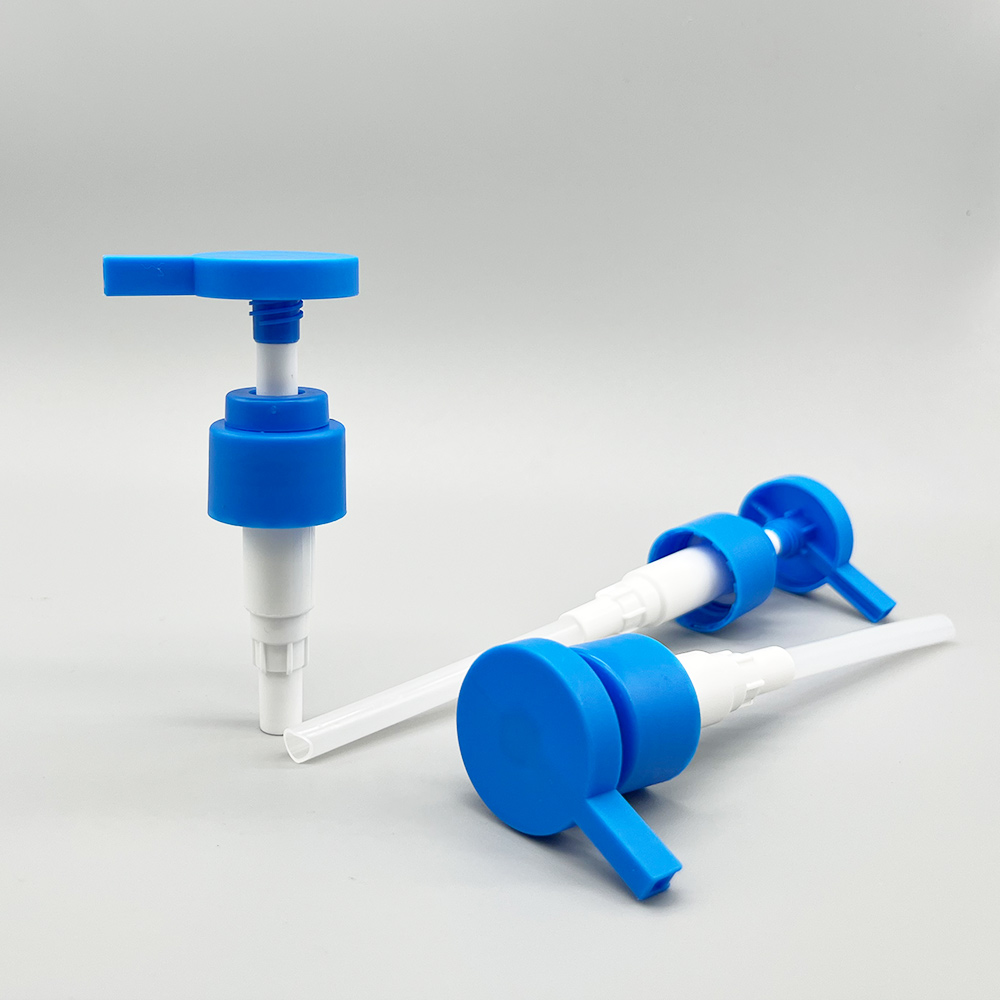
A typical foam pump includes the following parts:
- Actuator – the part pressed by the user
- Closure – connects the pump to the bottle neck
- Dip tube – draws liquid from the bottle
- Foam chamber – mixes liquid and air
- Mesh screen – helps create fine foam
- Spring and piston system – supports repeated dispensing
Why Use a Foam Pump for Facial Cleanser?
Foam pumps are especially suitable for facial cleanser packaging because facial cleansing products need both functionality and user comfort.
1. Better User Experience
Foam feels softer and easier to apply on the face. Instead of rubbing liquid cleanser directly on the skin, users can apply pre-formed foam more smoothly.
This can improve the perceived quality of the product, especially for skincare brands targeting daily facial cleansing.
2. Controlled Dispensing
A foam pump releases a controlled amount of product with each press. This helps users avoid taking too much cleanser at once.
For brands, controlled dispensing can improve product usage consistency and reduce waste.
3. Cleaner Application
Compared with open caps or squeeze bottles, foam pumps reduce direct contact with the product inside the bottle.
This can help improve hygiene in daily use, especially for facial care products used repeatedly.
4. Premium Packaging Appearance
Foam pump bottles often look cleaner, more modern, and more skincare-oriented.
For facial cleanser brands, packaging is not only functional. It also affects shelf appeal and consumer perception.
5. Suitable for Mild Cleansing Products
Many foam facial cleansers are positioned as gentle, daily-use, or sensitive-skin-friendly products. Foam packaging supports this product image because it delivers a soft and lightweight texture.
Foam Pump vs Lotion Pump for Facial Cleanser
| Feature | Foam Pump | Lotion Pump |
|---|---|---|
| Output Form | Foam | Liquid or gel |
| Best For | Foaming facial cleanser | Lotion, shampoo, body care |
| Formula Requirement | Low-viscosity foaming liquid | Medium to high-viscosity liquid |
| User Experience | Soft and lightweight | Direct liquid dispensing |
| Product Waste Control | Good in many cases | Depends on dosage |
| Packaging Positioning | Gentle skincare, cleansing | General personal care |
A foam pump is usually a better choice when the product is designed to be used as foam. A lotion pump is more suitable for thicker products such as shampoo, body lotion, or gel cleanser.
Related reading:
Foam Pump vs Lotion Pump
What Type of Formula Works Best with Foam Pumps?
Foam pumps are not suitable for every facial cleanser formula.
They usually work better with:
- Low-viscosity liquid formulas
- Water-based cleansers
- Foaming surfactant systems
- Products without large particles
- Formulas designed specifically for foam dispensing
They may not work well with:
- Thick gel cleansers
- Cream cleansers
- Scrub formulas with particles
- High-viscosity products
- Oil-heavy formulas
If the formula is too thick, the pump may clog, produce weak foam, or fail to dispense properly.
Common Foam Pump Output Range
Foam pump output depends on pump design and bottle size.
For facial cleanser packaging, common output ranges may include:
- Small output for travel-size facial cleanser
- Medium output for daily skincare products
- Larger output for hand wash or family-use products
In many facial cleanser applications, brands choose a pump output that gives enough foam for one cleansing use without excessive product waste.
Because output varies by pump model, it is recommended to test the actual pump with the final formulation before mass production.
How to Choose the Right Foam Pump for Facial Cleanser
Choosing a foam pump is not only about appearance. The pump must match the product formula, bottle, and brand positioning.
Step 1: Check Formula Viscosity
The first step is to confirm whether your facial cleanser formula is suitable for foam dispensing.
A foam pump usually requires a liquid formula with relatively low viscosity. If the cleanser is too thick, it may not pass through the foam chamber smoothly.
Step 2: Confirm Foam Quality
Different pumps can create different foam textures.
You should test:
- Foam density
- Foam softness
- Foam stability
- Dispensing smoothness
- Whether foam collapses too quickly
For facial cleanser, soft and fine foam is usually preferred.
Step 3: Match the Bottle Neck Size
The pump must fit the bottle neck correctly.
Common foam pump packaging may use different neck sizes depending on bottle design. Before ordering, confirm the bottle neck finish and pump closure specification.
Related reading:
Pump Size Guide
Step 4: Choose the Right Output Volume
Output volume affects both user experience and product consumption.
If the output is too small, users may need to press several times.
If the output is too large, product waste may increase.
For facial cleanser brands, the goal is to balance convenience and controlled usage.
Step 5: Test Compatibility
Compatibility testing is important before mass production.
You should test:
- Pump smoothness
- Foam quality
- Leakage
- Formula stability
- Long-term dispensing performance
- Bottle and pump sealing
In practical packaging projects, many problems are caused by mismatch between formula and pump structure rather than the pump alone.
Common Problems with Foam Pumps and How to Avoid Them
1. Weak Foam
Possible causes:
- Formula does not foam well
- Liquid is too thick
- Air-liquid ratio is not suitable
- Mesh structure does not match the formula
Solution:
Test the formula with different foam pump structures before confirming production.
2. Pump Not Dispensing
Possible causes:
- Dip tube blockage
- Formula viscosity too high
- Pump chamber clogged
- Incorrect assembly
Solution:
Check formula viscosity, dip tube length, and pump compatibility.
3. Leakage
Possible causes:
- Poor sealing
- Incorrect neck size
- Bottle and pump mismatch
- Transportation vibration
Solution:
Confirm bottle neck size and conduct leakage testing before shipment.
4. Foam Becomes Watery
Possible causes:
- Formula instability
- Incorrect surfactant system
- Incompatible pump structure
Solution:
Test foam performance after storage and transportation simulation.
Foam Pump for Facial Cleanser vs Squeeze Bottle
| Feature | Foam Pump Bottle | Squeeze Bottle |
|---|---|---|
| Dispensing Form | Foam | Liquid or gel |
| User Experience | Softer and cleaner | Depends on formula |
| Dosage Control | More controlled | Less consistent |
| Packaging Image | More premium | More basic |
| Formula Requirement | Foam-compatible formula | More flexible |
A foam pump bottle is often better for brands that want a gentle skincare image and a more convenient cleansing experience.
A squeeze bottle may be better for thicker gel cleansers or lower-cost packaging projects.
Best Applications for Foam Pump Facial Cleanser Packaging
Foam pumps are suitable for many skincare and personal care products, including:
- Daily facial cleanser
- Sensitive-skin cleanser
- Amino acid facial cleanser
- Baby wash
- Men’s facial cleanser
- Hand wash
- Mild cleansing foam
For skincare brands, foam pumps are especially useful when the product positioning focuses on mild cleansing, convenience, and premium user experience.
Custom Options for Foam Pumps
Foam pumps can often be customized based on brand requirements.
Common customization options include:
- Pump color
- Bottle color
- Closure style
- Output volume
- Locking system
- Logo printing
- Packaging material
- Bottle shape
For OEM and private-label skincare brands, customization helps make the product more consistent with brand identity.
Case Example: Facial Cleanser Packaging Selection
Problem: A skincare brand wanted to launch a gentle facial cleanser but found that the liquid formula did not create enough foam with a standard dispenser.
Method: The formula viscosity and foam pump structure were tested together. A more suitable foam pump was selected based on output, foam density, and dispensing smoothness.
Result: The final packaging delivered softer foam and improved the daily-use experience under typical usage conditions.
Expert Tip
For facial cleanser packaging, do not choose a foam pump only based on appearance or price.
The most important point is compatibility between the pump and the actual formula. A good foam pump should be tested with the final cleanser formula before bulk production.
Early testing can help reduce leakage, weak foam, clogging, and customer complaints later.
FAQ
What is a foam pump for facial cleanser?
A foam pump for facial cleanser is a dispensing pump that mixes liquid cleanser with air and releases it as foam.
How does a foam pump create foam?
It draws liquid cleanser from the bottle, mixes it with air inside the pump chamber, and passes it through a mesh structure to create foam.
Can any facial cleanser use a foam pump?
No. Foam pumps usually require low-viscosity formulas that are designed to foam. Thick gel or cream cleansers may not work well.
Is a foam pump better than a lotion pump for facial cleanser?
A foam pump is better if the product is designed to be used as foam. A lotion pump is better for thicker liquid or gel products.
Why is my foam pump not making foam?
Common reasons include formula incompatibility, high viscosity, pump blockage, or an unsuitable air-liquid mixing structure.
What should I test before ordering foam pumps in bulk?
You should test foam quality, leakage, output volume, bottle compatibility, formula stability, and dispensing performance.
Conclusion
A foam pump for facial cleanser is more than a simple dispenser. It affects foam quality, user experience, product waste, and overall packaging performance.
For facial cleanser brands, choosing the right foam pump depends on formula viscosity, foam quality, output volume, bottle compatibility, and product positioning.
In many cases, the best packaging result comes from testing the pump and formula together before mass production.
Need Help Choosing a Foam Pump for Facial Cleanser?
If you are developing a facial cleanser product or looking for custom foam pump packaging, we can help you evaluate:
- Foam pump type
- Bottle compatibility
- Output options
- Formula matching
- Custom packaging solutions